


Table of Contents
- What Is a Bulging Disc and How It Differs from a Herniated Disc
- Common Symptoms: From Numbness to Nerve Root Compression
- Causes, Risk Factors, and How Doctors Diagnose a Bulging Disc
- Bulging Disc Exercises for Core Strengthening and Pain Relief
- Bulging Disc Recovery Time: What to Realistically Expect
- Natural Remedies for Spinal Inflammation and Long-Term Maintenance
- Frequently Asked Questions
Last Updated: September 25, 2026
What Is a Bulging Disc and How It Differs from a Herniated Disc
A bulging disc is a spinal condition in which the soft, gel-like cushion between two vertebrae swells outward beyond its normal boundary, often pressing against nearby nerves.
Bulging Disc vs. Herniated Disc: Key Differences
| Feature | Bulging Disc | Herniated Disc |
|---|---|---|
| Outer ring | Intact, stretched | Torn or ruptured |
| Onset | Gradual, age-related | Often sudden |
| Disc material | Contained | Leaks outward |
| Common imaging term | Protrusion | Extrusion |
| Typical nerve pressure | Mild to moderate | Often more direct |
A bulging disc affects a broader area of the disc wall, while a herniation creates a focused point of pressure. Many people have mild bulging discs with no symptoms, which is why doctors rely on imaging plus a physical exam rather than scans alone.
Common Symptoms: From Numbness to Nerve Root Compression
Symptoms depend on where the bulge sits. In the lumbar spine, the most common complaints are low back pain, stiffness, and sciatica. In the cervical spine, you may feel neck pain, shoulder tightness, or aching that radiates into the arm.
Watch for these signs:
- Numbness or tingling in an arm, hand, leg, or foot
- Sharp, shooting pain that follows a nerve pathway
- Muscle weakness or a feeling that a limb "gives out"
- Pain that worsens with sitting, bending, or lifting
- Stiffness that eases with gentle movement
When Symptoms Signal Something More Serious
Most bulging discs improve with conservative care. A few warning signs need urgent attention: loss of bladder or bowel control, progressive weakness in both legs, or saddle-area numbness. These can point to a neurological deficit involving the spinal cord and are not something to manage at home.
Causes, Risk Factors, and How Doctors Diagnose a Bulging Disc
Age is the single biggest factor. Discs are roughly 80% water in young adulthood, and that share drops each decade, a process tied to degenerative disc disease. As discs lose water, they lose height and shock absorption, and the annulus fibrosus weakens, so the disc shifts outward under ordinary load.
- Repeated heavy lifting with poor form. Bending and twisting under load concentrates stress on the posterolateral disc wall, the most common site of lumbar bulging.
- Prolonged sitting. Sitting raises intradiscal pressure, and a flexed posture pushes material toward the back of the disc.
- Excess body weight. Extra abdominal weight increases the compressive load the lumbar discs carry all day.
- Smoking. Nicotine constricts the small blood vessels that supply the disc's outer ring.
- Occupational vibration and repetitive bending. Long-haul driving and jobs combining vibration with lifting are well-recognized risk patterns.
- Genetics. A family history of early disc degeneration raises risk independent of lifestyle.
How the Diagnosis Actually Unfolds
Diagnosis is a sequence, not a single test.
Step 1: History. Your clinician asks where the pain starts, where it travels, what makes it worse, and whether you have numbness, weakness, or bowel or bladder changes. Pain following a specific nerve pathway points to nerve root involvement rather than a muscle strain.
- Reflex testing. A diminished knee or ankle reflex can localize which nerve root is affected.
- Strength testing. Weakness in a specific muscle group, such as difficulty rising onto your toes or heels, maps to a specific level.
- Sensation testing. Light touch and pinprick along the leg or arm reveal which dermatome is irritated.
- Provocative tests. Straight leg raise for the lumbar spine and Spurling's test for the cervical spine reproduce nerve tension and help confirm the level.
Conditions That Can Mimic a Bulging Disc
A careful clinician rules out look-alikes first:
- Spinal stenosis. Narrowing of the spinal canal itself, often causing leg symptoms with walking that ease with sitting.
- Facet joint arthritis. Pain that is more central and worse with extension rather than with nerve-pathway travel.
- Piriformis syndrome. Deep buttock pain that mimics sciatica but originates in the muscle.
- Sacroiliac joint dysfunction. Pain localized to one side of the lower back, often below the belt line.
- Peripheral neuropathy. Numbness and burning that follow a stocking-glove pattern rather than a single nerve root.
Progressive weakness, loss of bladder or bowel control, or saddle-area numbness suggest cord or cauda equina compression and are treated as urgent.
Bulging Disc Exercises for Core Strengthening and Pain Relief
The right exercises reduce pressure on the disc and build the muscles that support your spine. Core strengthening is the foundation, but it must be gentle at first; aggressive twisting or heavy loading too early can worsen nerve symptoms.
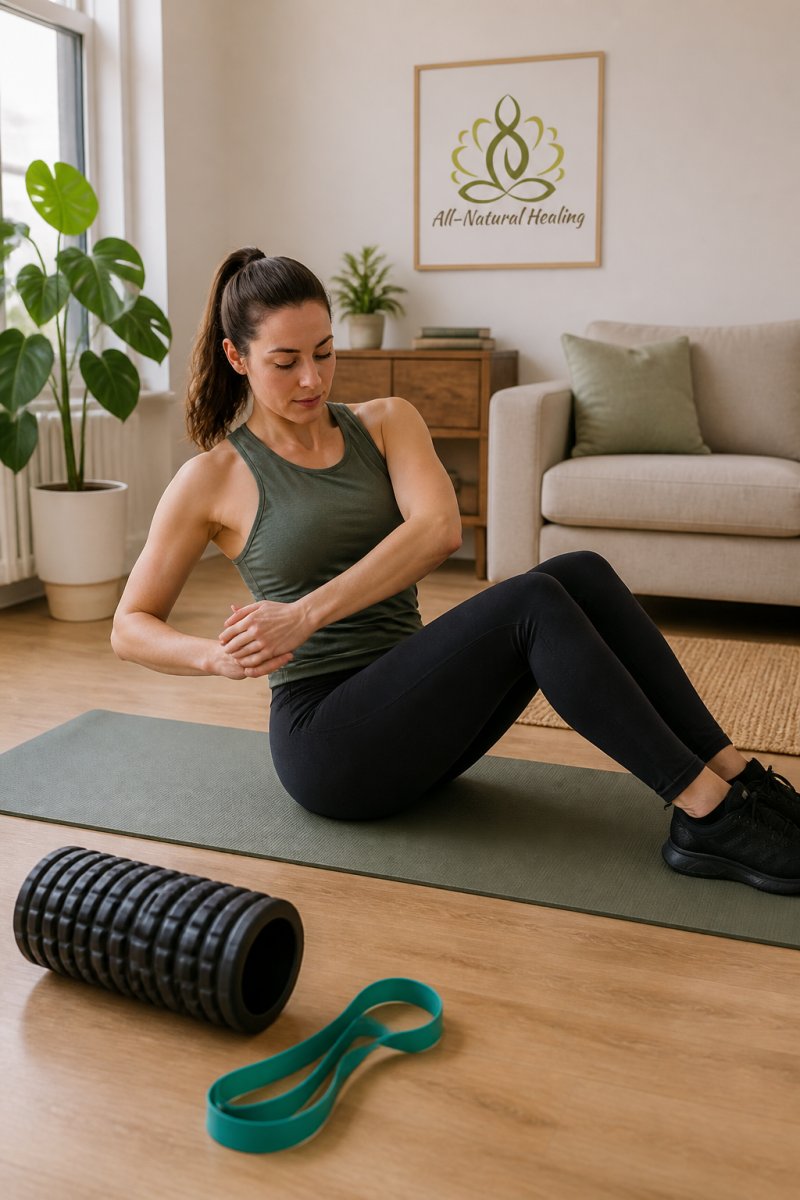
Five Safe Exercises You Can Start Today
- Pelvic tilts: Lie on your back, knees bent, and gently flatten your lower back into the floor. Hold 5 seconds, repeat 10 times.
- Bird dog: On hands and knees, extend the opposite arm and leg while keeping your spine neutral. 8 reps per side.
- Glute bridges: Lie on your back, lift your hips until your body forms a straight line. Hold 3 seconds, 12 reps.
- Cat-cow: On hands and knees, alternate arching and rounding your spine slowly. 10 slow cycles.
- Wall angels: Stand with your back to a wall and slide your arms up and down while keeping contact. 10 reps.
Stop any movement that sends sharp pain down a limb. Mild discomfort in the back muscles is normal; shooting nerve pain is not.
Bulging Disc Recovery Time: What to Realistically Expect
Most people with a bulging disc feel meaningfully better within four to six weeks of consistent conservative treatment, though full recovery can take three months or longer depending on severity and location. Flare-ups during healing are common.
Natural Remedies for Spinal Inflammation and Long-Term Maintenance
The harder question is how you keep a managed disc from becoming a recurring problem. That maintenance phase is where nutrition, daily movement patterns, and realistic expectations matter most.
Anti-Inflammatory Nutrition: What the Evidence Supports
Chronic disc pain involves systemic inflammation, and diet is one of the few levers you control daily. Research most consistently supports a Mediterranean-style approach rather than any single "miracle" food.
Foods to build meals around:
- Fatty fish such as salmon, sardines, and mackerel, which are rich in omega-3 fatty acids.
- Colorful vegetables and fruit, especially leafy greens, berries, and cruciferous vegetables.
- Olive oil as a primary fat source.
- Whole grains, beans, and legumes for fiber and steady energy.
- Nuts and seeds, particularly walnuts and flaxseed.
Foods to cut back on:
- Added sugar and refined carbohydrates, which drive blood sugar spikes linked to inflammatory markers.
- Processed meats and fried foods.
- Excess alcohol.
Heat, Traction, and Targeted Home Therapy
Heat therapy relaxes the paraspinal muscles that guard an injured spine, often the source of much of the ache. Gentle traction takes compressive load off the disc and can ease nerve irritation. Both work best alongside movement and strengthening.
Ergonomic Workspace Modifications That Protect Your Spine
Small changes to how you sit and stand add up, especially for desk workers.
- Raise your screen to eye level so your neck stays neutral.
- Support the lumbar curve, not the mid-back.
- Keep elbows at roughly 90 degrees.
- Use a footrest if your chair is too tall.
- Take a movement break every 30 minutes.
The Psychological Toll Most Guides Skip
Chronic disc pain does not stay in the back. It changes sleep, mood, and identity, and people with persistent pain are more likely to report anxiety, low mood, and a sense of losing control over their body. That is a predictable response to a nervous system on alert for months.
What helps:
- Naming it. Telling your clinician that pain is affecting your mood is a clinical data point, not a complaint.
- Pacing, not pushing. Alternating activity and rest prevents the boom-and-bust cycle that drives flare-ups.
- Sleep hygiene. Pain disrupts sleep, and poor sleep lowers pain tolerance the next day. Protecting a consistent sleep window breaks that loop. If snoring or disrupted breathing is part of the problem, a nasal clip for sleep apnea is designed to make nasal breathing easier by helping clear the nasal passages and nasopharynx.
- Cognitive behavioral strategies. Structured programs for chronic pain have solid evidence for reducing pain-related distress.
- Connection. Isolation worsens pain perception. Support groups, a trusted physical therapist, or a regular walking partner make a measurable difference.
Long-Term Prognosis and Lifestyle Maintenance
Once the acute phase passes, the goal shifts from getting better to staying better:
- Keep moving. A daily walk and two to three short core sessions per week maintain the support structure around the spine.
- Protect your lifting mechanics. Hinge at the hips, keep the load close, and avoid bending and twisting at the same time.
- Manage weight. Even modest weight reduction lowers the daily compressive load on the lumbar spine.
- Re-check your setup. Reassess your desk, car seat, and mattress every year or after any major change.
- Know your flare-up plan. Most people with a managed disc will have occasional bad weeks. Having a written plan, rest, heat, gentle movement, and a call to your clinician if it does not improve, keeps a flare-up from becoming a crisis.
Frequently Asked Questions
How do you treat a bulging disc?
Most bulging disc cases improve with conservative treatment: rest from aggravating activities, over-the-counter anti-inflammatory medication, physical therapy focused on core strengthening, and posture correction. Epidural steroid injections can reduce severe nerve root compression pain. Surgery such as microdiscectomy or laminectomy is reserved for cases with neurological deficit or pain that does not improve after six to twelve weeks of conservative care. Always consult your doctor before starting any treatment plan.
Does a bulging disc ever go away?
A bulging disc does not typically retract fully on its own, but symptoms often resolve. Research shows that many people with disc protrusion experience significant pain relief within six to twelve weeks as inflammation subsides and surrounding muscles compensate. The disc itself may remain bulged on magnetic resonance imaging, yet cause no pain. Long-term management through core strengthening, posture correction, and anti-inflammatory nutrition helps keep symptoms away.
What should you not do with bulging discs?
Avoid heavy lifting, especially with a rounded lower back. Skip high-impact activities like running or jumping during flare-ups. Do not sit for extended periods without breaks, and avoid toe touches or sit-ups that flex the lumbar spine under load. Smoking restricts blood flow to the intervertebral disc and slows healing. If you feel numbness, tingling, or motor weakness in your legs, stop activity and see a doctor promptly.
Does walking help a bulging disc?
Walking is one of the safest activities for a bulging disc. It promotes circulation to the spinal column, reduces stiffness, and supports core strengthening without loading the spine heavily. Start with short, flat walks of five to ten minutes and gradually increase. If walking causes sharp pain or sciatica down your leg, shorten the distance or switch to swimming or stationary cycling until symptoms calm.
Chronic back pain can make even simple daily tasks feel exhausting, and the road back to comfort is rarely quick. At All-Natural Healing Store, we carry tools chosen to support that recovery, from the Lumbar Traction w/ Heated Massager to cervical traction devices and ergonomic supports, each one vetted by Dr. House for quality and safety. Get started with All-Natural Healing Store and give your spine the daily support it needs to heal.


