

Table of Contents
- Natural Remedies vs Conventional Medicine Efficacy: What the Evidence Actually Shows
- Safety of Natural Supplements vs Prescription Drugs: Adverse Events and Drug-Herb Interactions
- How to Choose High-Quality Herbal Remedies: Standardization and Dosage Consistency
- Integrative Medicine Benefits: Combining Botanical Medicine With Evidence-Based Practice
- Chronic Conditions and Symptom Management: Where Each System Fits
- Regulatory Oversight, the Placebo Effect, and the Cost of Long-Term Care
- Frequently Asked Questions
Last Updated: September 24, 2026
Natural Remedies vs Conventional Medicine Efficacy: What the Evidence Actually Shows
Natural remedies vs conventional medicine efficacy is not a contest with a single winner. It is a comparison of two systems that measure success in different ways, regulate products under different rules, and fit different jobs. At All-Natural Healing Store, we have spent years helping people sort real botanical options from marketing noise, and the honest answer is that each system wins on different ground.
Here is what most guides get wrong: they frame this as natural versus synthetic, as if "plant-based" automatically means safer or weaker.
How Clinical Trials Measure Therapeutic Efficacy Differently
Conventional drugs move through phased clinical trials that compare an active treatment against a placebo or an existing standard. Researchers track adverse events, pharmacokinetics, and a therapeutic index that weighs benefit against risk. This is a rigorous, expensive path, and it produces the peer-reviewed research that evidence-based practice depends on.
Safety of Natural Supplements vs Prescription Drugs: Adverse Events and Drug-Herb Interactions
The safety of natural supplements vs prescription drugs comes down to two questions: what can go wrong, and who is watching for it. Conventional drugs carry documented side effects and a reporting system that flags adverse events. Natural products are often assumed harmless because they are "from nature," and that assumption causes real harm.
Why 'Natural' Does Not Automatically Mean Well-Tolerated
A compound being natural says nothing about its toxicity or its therapeutic index. Arsenic is natural. So is hemlock. The word "natural" is a marketing term, not a safety certification, and treating it as one is how people get hurt.
How to Choose High-Quality Herbal Remedies: Standardization and Dosage Consistency
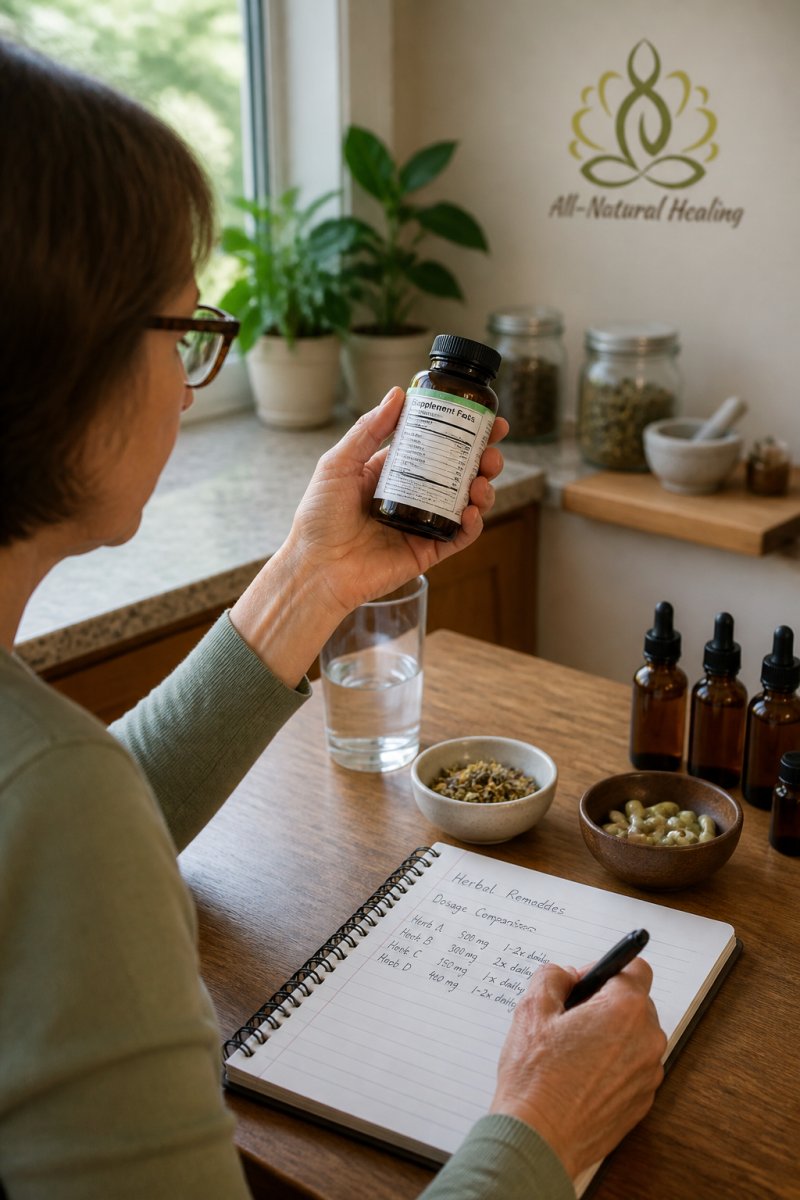
Choosing high-quality herbal remedies comes down to standardization and dosage consistency. A product that lists a plant name without a standardized marker for its active compounds gives you no way to know what you are actually taking. This is the single biggest gap between a supplement that works and one that just occupies shelf space.
The Quality-Control Metrics That Actually Matter
Most guides stop at "look for third-party testing." Here is what that testing actually checks, and which certifications carry weight:
- Identity testing confirms the plant species and plant part. A product labeled "echinacea" should specify whether it uses the root, aerial parts, or both, because the active-compound profile differs.
- Potency and marker-compound assays verify that the stated amount of the marker compound is actually present. A certificate of analysis (COA) from an independent lab should list the marker, the method used (such as HPLC), and the result.
- Contaminant screening tests for heavy metals (lead, arsenic, cadmium, mercury), residual solvents, pesticides, and microbial contamination. Botanical raw materials are agricultural products, so this step is not optional.
- Dissolution testing measures how much of the compound dissolves in a simulated digestive environment, a proxy for bioavailability. A product can pass potency testing and still fail dissolution, meaning your body never absorbs what the label promises.
Reading a Supplement Label: Active Compounds, Bioavailability, and Third-Party Testing
Here is a checklist for reading any label:
- Is the botanical name listed with the plant part used?
- Is there a standardized marker for the active compound, with a percentage or milligram amount?
- Does the label state the amount per serving?
- Is there a third-party test, certificate of analysis, or certification mark (USP, NSF)?
- Are allergens, fillers, and excipients disclosed clearly?
- Does the manufacturer list a lot number and expiration date?
A label that answers all six is doing its job. One that answers none is asking for your trust without earning it. When in doubt, contact the manufacturer and ask for the COA for the specific lot number on your bottle, a reputable company will provide it.
Integrative Medicine Benefits: Combining Botanical Medicine With Evidence-Based Practice
Integrative medicine benefits come from using both systems where each is strongest, not from picking a side. This is the holistic approach done properly: complementary medicine used alongside proven care, with patient-centered care as the goal.
Chronic Conditions and Symptom Management: Where Each System Fits
Chronic conditions are where the two systems most often work together. Conventional medicine tends to target the underlying pathology with drugs that have been tested for that specific disease. Botanical medicine tends to focus on symptom management and daily comfort.
Regulatory Oversight, the Placebo Effect, and the Cost of Long-Term Care
Regulatory oversight differs sharply between the two categories, and understanding the framework tells you exactly where the risk sits. Prescription drugs must clear pre-market approval through the FDA's phased trial process, with demonstrated efficacy and a reviewed safety profile before they reach a pharmacy shelf. Dietary supplements operate under a different law, the Dietary Supplement Health and Education Act (DSHEA) of 1994, which treats them as a post-market category.
What the Regulatory Framework Actually Requires
Three details matter more than the general "supplements are less regulated" talking point:
- Current Good Manufacturing Practices (cGMP) apply to supplement manufacturers. Facilities are expected to test identity, purity, strength, and composition, and to keep records. The FDA inspects facilities, but it does not review or approve individual products before sale.
- Structure-function claims are the statements you see on supplement labels, "supports immune health," "promotes relaxation." These are permitted without FDA pre-approval, but they cannot claim to diagnose, treat, cure, or prevent a disease. A product that crosses that line is making an illegal claim.
- Adverse event reporting is mandatory for supplement manufacturers, but it is passive. Problems surface only when consumers or clinicians report them, which means the safety signal for a botanical is often weaker and slower than for a drug.
The Placebo Effect in Both Systems
The placebo effect runs through both systems and is not a reason to dismiss either. It is a real, measurable phenomenon that shows up in clinical trials of drugs and herbs alike. What matters is whether a treatment beats placebo, not whether placebo exists. A remedy that only works because of expectation is not a reliable treatment for a chronic condition, but a remedy that outperforms placebo in a blinded trial has earned its place regardless of its origin.
A Real Cost-Benefit Framework for Long-Term Care
A cost-benefit analysis for long-term care has to weigh more than the sticker price of a bottle. The framework has four components:
- Direct treatment cost, the recurring out-of-pocket expense of the remedy or prescription, including refills and dose adjustments over months and years.
- Monitoring cost, the lab work, follow-up visits, and interaction checks that a well-managed regimen requires. Conventional drugs often carry more of this; botanicals carry it too when they are used responsibly.
- Cost of preventable harm, an untreated or undertreated condition that progresses, or an interaction that lands someone in urgent care. This is the most expensive line item and the one most often ignored.
- Cost of ineffective care, money spent on a remedy that does nothing. Over a year, a cheap product that fails is more expensive than a verified product that works, because you pay twice: once for the ineffective product and again for the treatment you eventually need.
Frequently Asked Questions
Are natural remedies scientifically proven to be effective?
It depends on the remedy. Some botanical ingredients have been studied in peer-reviewed research and show measurable therapeutic efficacy for specific conditions, while others rest mainly on traditional use. The gap usually comes down to study design: many herbal products lack large clinical trials, and the placebo effect can be strong in self-reported outcomes. That does not make them useless, but it does mean you should look for a specific ingredient, a specific dose, and evidence tied to your specific condition rather than a general claim that something is natural.
What are the primary safety differences between herbal supplements and synthetic drugs?
Prescription drugs go through FDA review for safety and effectiveness before they reach the market. Herbal supplements are regulated as dietary supplements, so they are not pre-approved for efficacy, and dosage consistency between brands can vary widely. The bigger practical risk with herbals is not usually toxicity but drug-herb interactions. St. John's wort, for example, affects how the body metabolizes several prescription medications. Tell your pharmacist about every supplement you take, especially if you manage chronic conditions or take blood thinners.
Can natural remedies be used safely alongside conventional medical treatments?
Often yes, but timing and disclosure matter. Many integrative medicine programs combine botanical medicine with standard care for symptom management, and this approach works best when both practitioners know the full picture. Before adding anything, bring the bottle to your doctor or pharmacist so they can check for drug-herb interactions. Keep a written list of everything you take, including doses. Never stop a prescribed medication on your own to try an alternative, and treat any new symptom after starting a supplement as a reason to call your provider.
How do I know if a natural product is high quality or just marketing?
Look for three things: a named active compound with a stated amount, a standardization claim such as 'standardized to 5% withanolides,' and a third-party testing mark from a lab that verifies identity and purity. Vague blends that list 15 ingredients without amounts make dosage consistency impossible to judge. A short ingredient list you can verify beats a long one you cannot. If a label promises relief for a dozen unrelated conditions, that is a signal to look elsewhere.


