

Table of Contents
- Why Authentication Matters More Than Ever
- FDA Regulation of Dietary Supplements: What It Does and Doesn't Cover
- How to Read Herbal Supplement Labels Like an Expert
- Third-Party Supplement Testing: The Gold Standard for Verification
- Visual Inspection: What Authentic Herbs Look Like
- Digital Authentication Tools for Modern Shoppers
- Your Action Plan for Finding Authentic Herbal Remedies
- Conclusion
- Frequently Asked Questions
Last Updated: September 6, 2026
Authentic herbal remedies are products whose botanical identity, purity, and active constituents match their label claims, verified through independent testing rather than marketing language. The supplement aisle is crowded with lookalikes, and the difference between a product that works and one that wastes your money often comes down to authentication practices you can check in under five minutes. At All-Natural Healing Store, our products are personally vetted by Dr. House, also known as "Dr. Holistic," who has 30 years of experience in the environmentally safe health and nutrition industry.
The stakes go beyond wasted money. A product mislabeled as one herb but containing another can deliver the wrong pharmacological activity or expose you to contaminants. Below, we'll show you exactly how to verify what you're buying, from reading the supplement facts panel to using digital authentication tools.
Why Authentication Matters More Than Ever
The herbal supplement market has grown faster than the oversight that governs it. Adulteration, the practice of substituting cheaper ingredients or adding undisclosed synthetic compounds, remains a persistent concern. When a product contains something other than what its label claims, you lose both therapeutic efficacy and safety.
Heavy metals and pesticide residues accumulate in plants grown in contaminated soil, and without batch testing, those toxins end up in your daily routine. This matters most for people using herbal remedies to manage chronic wellness concerns, since long-term use amplifies any exposure to contaminants.
Authentic herbal remedies are verified through a chain of custody that includes botanical identity checks, contaminant screening, and potency testing. Each step in that chain adds confidence. Each missing step introduces risk. Understanding this chain is the foundation for every other skill in this guide.
FDA Regulation of Dietary Supplements: What It Does and Doesn't Cover
Dietary supplements, including herbal products, are regulated under the Dietary Supplement Health and Nutrition Act of 1994, which places responsibility for product safety and labeling on manufacturers rather than requiring pre-market approval by the FDA (the FDA). The FDA can take action against unsafe products after they reach the market, but it does not verify that a supplement is effective or that its ingredients match its label before you buy it.
The practical implication is straightforward: a supplement can sit on a shelf legally even if its active ingredients don't match its label claims. The FDA's guidance on dietary supplements makes clear that manufacturers are responsible for ensuring their products are safe and properly labeled, but the agency's resources focus on post-market surveillance rather than pre-approval review.
This regulatory gap explains why two bottles with identical names can contain very different products. One manufacturer may run comprehensive batch testing while another ships whatever passes a visual check. The label alone cannot tell you which one you're holding.
How to Read Herbal Supplement Labels Like an Expert
Learning how to read herbal supplement labels correctly is the first line of defense against mislabeled products. Top-tier brands design their labels to be transparent, while less scrupulous manufacturers often rely on confusing terminology to obscure what's really inside the bottle.
Supplement Facts Panel vs. Herbal Ingredients
The supplement facts panel lists active ingredients, serving size, and amounts per serving, but for herbal products, this panel often tells an incomplete story. Botanical products frequently list the plant part used and the extraction ratio rather than a precise concentration of active compounds.
Here’s what to look for in each field:
- Plant Part: The label must specify which part of the plant was used (root, leaf, bark, seed, or flower). Different parts contain different chemical profiles. For example, the root of Valeriana officinalis is used for sleep support, while the leaf has a different composition. A label that just says "Valerian" without specifying the part is a red flag.
- Extraction Ratio: This number (e.g., 4:1) tells you how much raw plant material was used to produce the extract. A 4:1 extract means four pounds of herb were concentrated into one pound of extract. A higher ratio doesn't automatically mean better, but it does indicate a more concentrated product. If the ratio is missing, the manufacturer may be using a weak, poorly characterized extract.
- Standardization: A standardized extract guarantees a consistent level of marker compounds, which supports reliable dosing. Look for terms like "standardized to contain" followed by a specific percentage of an active ingredient. For example, a high-quality turmeric extract might be "standardized to contain 95% curcuminoids." Products without standardization can vary in potency from batch to batch, making it harder to predict how your body will respond.
- Other Ingredients: Check the "Other Ingredients" section for fillers, binders, and flow agents. Common ones like magnesium stearate and silicon dioxide are generally safe, but a long list of artificial colors, preservatives, or proprietary excipients can indicate a lower-quality product. If you have sensitivities, look for labels that state "free from" common allergens like soy, gluten, and dairy.
Red Flags in Label Claims
Certain language patterns signal problems. Be wary of products promising instant cures, guaranteed results, or effects that sound too dramatic to be plausible. Legitimate herbal products make measured claims about supporting health, not sweeping promises about treating or curing conditions. The FDA prohibits dietary supplements from claiming to diagnose, treat, cure, or prevent any disease. A label that says "cures arthritis" is not just a red flag, it's illegal.
Another red flag is vagueness. A label that lists "proprietary blend" without disclosing individual herb amounts gives you no way to assess whether you're getting a meaningful dose. Under FDA labeling rules, a proprietary blend only needs to list the total weight of the blend, not the weight of each ingredient. This means a product could contain 99% of a cheap filler herb and only 1% of the expensive active herb, and you'd never know from the label.
Similarly, missing botanical identity details, such as the Latin name and the specific plant part used, suggests a manufacturer cutting corners on quality assurance. Always cross-reference the common name with the Latin binomial. For instance, "Echinacea" could refer to Echinacea purpurea, Echinacea angustifolia, or Echinacea pallida, each with slightly different active constituents. A reputable label will always include the full Latin name.
Third-Party Supplement Testing: The Gold Standard for Verification
Third-party supplement testing is the most reliable way to confirm that a product contains what its label claims. Independent laboratories analyze samples for identity, purity, and potency, then issue certifications that reputable brands display prominently.
Not all third-party testing carries equal weight. Look for certifications from organizations with established testing protocols and quality standards, such as those described by the U.S. Pharmacopeia's verification program. These programs conduct random batch testing and facility audits, providing oversight that goes beyond a single certificate of analysis.
How to Verify a Third-Party Certification
A certification is only as good as your ability to confirm it. Seals can be counterfeited or used on products that weren't actually tested. Here is the step-by-step verification process that takes less than five minutes:
- Check the Product Packaging: Look for a seal from a recognized third-party verifier: USP (U.S. Pharmacopeia), NSF International, or ConsumerLab.com. These are the three most widely recognized programs in the United States. Each has different standards, but all involve independent testing.
- Locate the Lot Number: Every bottle should have a lot or batch number printed on the label or stamped on the bottom. This is your key to traceability. If there's no lot number, that's an immediate red flag, it means the manufacturer cannot track which production run your bottle came from.
- Visit the Certifying Organization's Website: Do not rely on the brand's website to verify its own certification. Go directly to the third-party's site. For example, USP maintains a public database of certified products. NSF International has a similar online listing. Search for the brand name and the specific product name.
- Match the Lot Number: If the certifying body lists the product, check whether the lot number on your bottle matches the lot that was tested. Some brands test every batch; others test only once a year. A lot-specific match is the gold standard. If the certification is product-wide but not lot-specific, the testing may be less frequent than you'd like.
- Request the Certificate of Analysis (CoA): If you can't find the information online, contact the manufacturer directly and ask for the CoA for your specific lot number. A legitimate manufacturer will provide this document without hesitation. The CoA should show the results for identity testing (confirming the plant species), purity testing (screening for contaminants), and potency testing (confirming the active compound levels).
A brand that cannot produce verifiable third-party test results for a specific lot should raise immediate questions. Testing should be routine, not something customers have to request repeatedly.
Visual Inspection: What Authentic Herbs Look Like
Visual inspection of raw herbs provides a useful first screen, though it cannot replace laboratory testing. Authentic herbs have recognizable characteristics, including consistent color, texture, and aroma, that adulterated products often fail to match. Whole herbs should show uniform color without unusual dark spots or discoloration that might indicate poor drying or contamination.
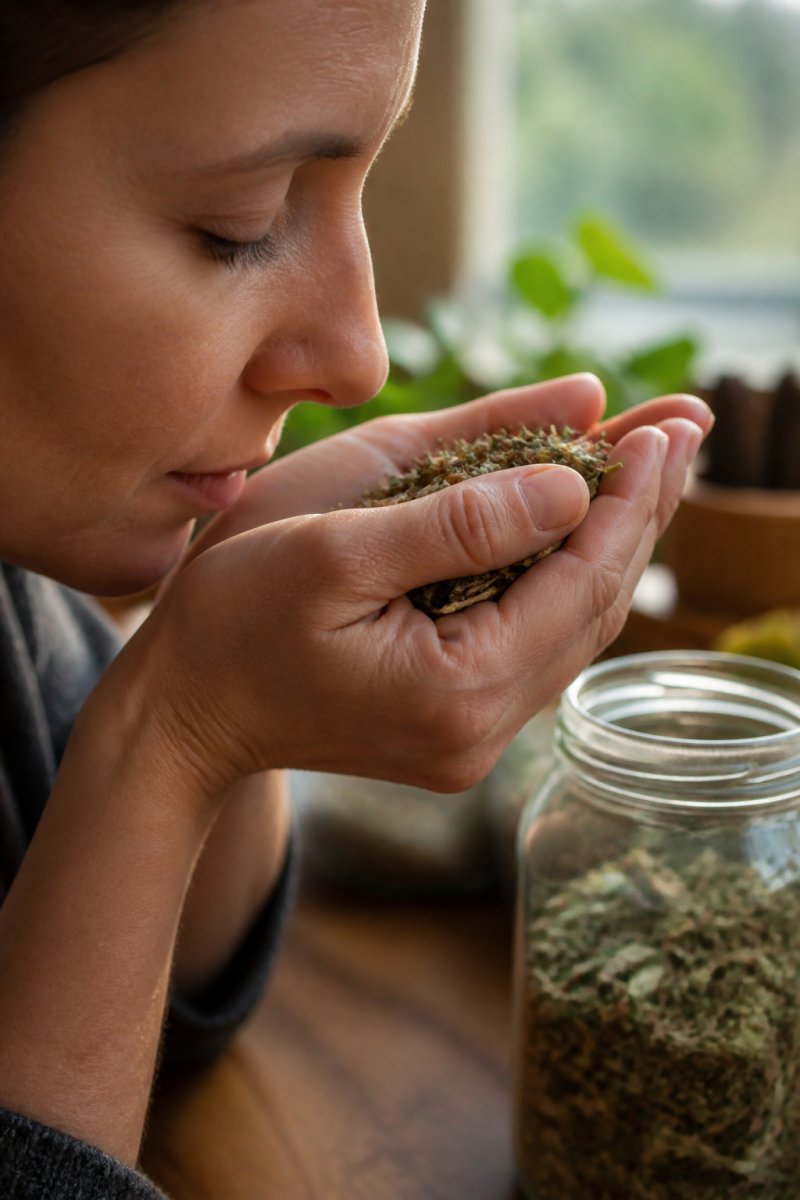
Powdered herbs present a greater challenge, since grinding removes the visual cues that help identify whole plant material. With powders, aroma becomes more important. Each herb has a characteristic smell, and a product that smells flat, chemical, or simply wrong deserves skepticism.
Texture also matters. Properly dried herbs should feel consistent throughout, without clumping that suggests moisture exposure or the gritty inconsistency that can indicate filler materials. These observations provide an early warning system that costs nothing.
Digital Authentication Tools for Modern Shoppers
Digital authentication tools are closing the gap between manufacturers and consumers. Many reputable brands now include QR codes on packaging that link directly to batch-specific test results, allowing you to confirm that the bottle in your hand matches the data on file.
Some brands go further with blockchain-based traceability systems that document each step from farm to finished product, making it harder for adulterated materials to enter undetected. While not yet universal, this level of transparency is becoming a meaningful differentiator among premium supplement brands.
Another useful approach is searching the brand name alongside terms like "certificate of analysis" or "batch test results." Brands committed to quality make this information easy to find. Brands that avoid the question or offer vague assurances about quality control deserve additional scrutiny.
Your Action Plan for Finding Authentic Herbal Remedies
Finding authentic herbal remedies requires a consistent approach rather than a single check. Build a routine that combines the verification methods covered here:
| Verification Step | What to Check | Time Needed |
|---|---|---|
| Label review | Standardization, Latin names, plant part, no disease claims | 2 minutes |
| Third-party certification | Lot-specific certificate of analysis from a recognized program | 3 minutes |
| Visual and aroma inspection | Consistent color, texture, and characteristic smell | 1 minute |
| Digital verification | QR code or online batch test results | 1 minute |
Start with brands that openly discuss their sourcing and testing practices. A manufacturer that publishes its quality control protocols is signaling confidence in its processes. Apply the same standards to every product, regardless of price point.
For traditional formulas like Plum Flower's Stasis in the Mansion of Blood Teapills, choosing a supplier with established quality practices matters as much as the formula itself. Brands that have maintained relationships with trusted manufacturers over decades, as we have at All-Natural Healing Store, can speak directly to their sourcing and testing standards.

Conclusion
Verifying authentic herbal remedies comes down to asking the right questions and knowing where to find answers. Check the label for standardization and botanical identity, confirm third-party testing with lot-specific results, trust your senses during visual inspection, and use digital tools to close the loop. Each step protects you from adulteration and ensures you're getting the therapeutic benefits you're paying for.
At All-Natural Healing Store, every product in our catalog is personally vetted by Dr. House, whose 30 years of experience in the health and nutrition industry informs our curation process. We prioritize third-party testing, transparent labeling, and protection from modern pollutants so you can shop with confidence. For those whose wellness routine extends to addressing sleep-related breathing issues, we also offer the Dr. Holistic's Nasal Clip for Sleep Apnea, a non-invasive aid designed to support clearer nasal breathing. Browse our selection of herbal remedies and supplements to find products that meet the standards outlined in this guide.
Frequently Asked Questions
What should I look for on a supplement label to ensure quality?
Check for a Supplement Facts panel, not just a list of herbs. Look for the herb's botanical name, the part used, the extraction method, and a clear dosage. A quality label also shows a third-party certification seal and a batch or lot number. Avoid products that hide ingredients behind a proprietary blend without individual amounts. Reputable brands provide contact information and a way to trace the batch.
How can I tell if an herbal product has been third-party tested?
Look for seals from independent organizations like USP, NSF, or ConsumerLab on the label. Then verify the seal by visiting the certifier's website and searching for the brand or product name. Some brands also print a QR code that leads to the Certificate of Analysis. If you cannot confirm the certification through the third party's own database, contact the manufacturer and ask for the specific report.
Are there any herbal medicines that are actually effective?
Yes. Several herbs have strong clinical evidence for specific uses. For example, St. John's Wort has data supporting its use for mild depression, and ginger is well-studied for nausea. The key is matching the right herb to the right condition and using a product with verified active ingredients. For authentic herbal remedies, look for products from manufacturers that standardize their extracts and provide batch-specific test results.
What does the FDA actually regulate when it comes to herbal supplements?
The FDA regulates dietary supplements under the Dietary Supplement Health and Education Act of 1994. The agency does not approve supplements for safety or effectiveness before they go to market. Manufacturers must ensure their products are safe and that label claims are truthful. The FDA can take action against a product only after it reaches the market and is found to be unsafe or mislabeled.


