

Table of Contents
- Why Authenticity Matters with Natural Health Products
- Step 1: Check for Regulatory Seals and Certification Marks
- Step 2: How to Read Supplement Labels Correctly
- Step 3: Third-Party Supplement Testing and What It Proves
- Step 4: Identifying Counterfeit Health Products Online and In-Store
- Step 5: Safe Online Purchasing and Authorized Resellers
- Step 6: Supply Chain Transparency and What to Ask Before You Buy
- How Expert Curation Helps You Find Authentic Natural Health Products
Last Updated: August 30, 2026
Why Authenticity Matters with Natural Health Products
The supplement aisle has a trust problem. Counterfeit, mislabeled, and adulterated products have made their way onto store shelves and e-commerce platforms, making it difficult for health-conscious consumers to know what they're actually buying. At All-Natural Healing Store, we've spent over 30 years navigating this landscape, and the stakes are real: consuming a product with inaccurate ingredients, undisclosed contaminants, or false health claims can undermine your wellness goals or cause harm.
Natural health products cover dietary supplements, herbal remedies, vitamins, minerals, and botanicals. Identifying authentic ones means verifying that what's on the label is actually in the bottle, that it was manufactured safely, and that the seller is legitimate.
This guide walks you through six concrete steps to verify any product before you buy it. Most people check the front of the package and stop there, but the front label is almost entirely marketing. The real information is elsewhere.
Step 1: Check for Regulatory Seals and Certification Marks
Regulatory seals and certification marks are the fastest first filter for authentic natural health products. They tell you that an independent authority has verified something specific about the product, whether that's manufacturing standards, ingredient identity, or contaminant levels.
FDA Registration and DSHEA Compliance
The Dietary Supplement Health and Education Act (DSHEA) governs dietary supplements in the United States. Under DSHEA, manufacturers are responsible for ensuring their products are safe before bringing them to market. The FDA does not pre-approve supplements, but it does regulate manufacturing practices through Current Good Manufacturing Practices (cGMPs). According to FDA's dietary supplement regulations overview, facilities that manufacture dietary supplements must register with the FDA and follow cGMP standards covering identity, purity, strength, and composition.
Look for a statement on the label that the product was manufactured in an FDA-registered facility. This isn't a guarantee of quality, but its absence is a red flag.
Pharmacopeia and Independent Certification Bodies
Several independent organizations offer voluntary certification that carries real weight:
- USP (U.S. Pharmacopeia): Products bearing the USP Verified mark have been tested for ingredient identity, potency, and the absence of harmful contaminants.
- NSF International: NSF Certified for Sport and NSF/ANSI 173 certifications verify that products contain what the label claims and are free from certain banned substances.
- ConsumerLab: An independent testing organization that publishes results for supplements purchased on the open market.
Step 2: How to Read Supplement Labels Correctly
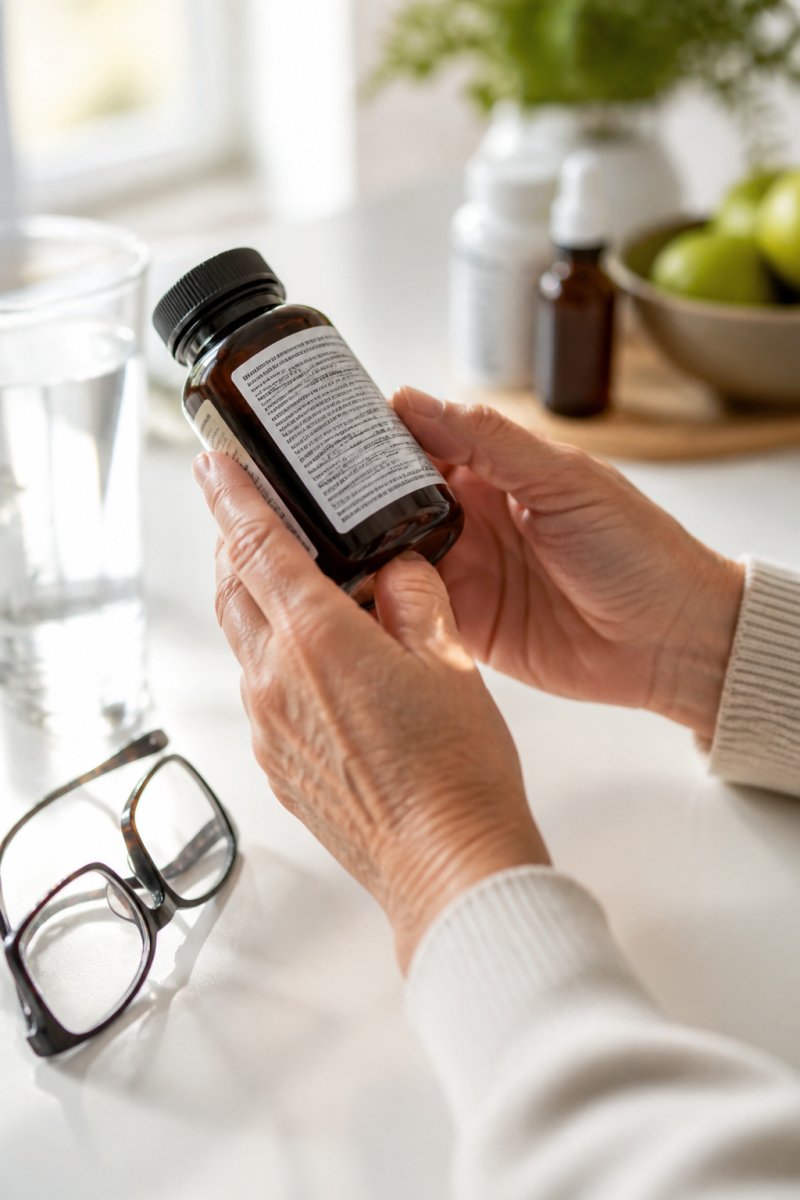
Most consumers scan the front panel and miss the most informative part of any supplement: the Supplement Facts panel and ingredient list on the back or side. Learning to read this section correctly separates informed buyers from everyone else.
Supplement Facts Panel: What Each Field Tells You
The Supplement Facts panel is standardized by the FDA and must include:
- Serving size and servings per container: Calculate actual cost per dose and compare products accurately.
- Amount per serving: Listed in milligrams, micrograms, or international units. Compare this against research-supported dose ranges.
- % Daily Value (%DV): Only listed when an established daily value exists. Many herbal ingredients will show a dagger symbol (†) instead, meaning no DV has been established.
- Other ingredients: This list reveals fillers, binders, coatings, and allergens. Authentic products disclose everything here.
Ingredient Purity, Standardized Extracts, and Health Claims
Standardized extracts are herbal preparations guaranteed to contain a specific percentage of an active compound. For example, a milk thistle extract standardized to 80% silymarin tells you the active constituent is consistent across batches. Generic "herb powder" with no standardization offers no such guarantee.
Health claims on supplement labels are tightly regulated. The FDA permits nutrient content claims, pre-approved health claims, and structure/function claims (which require a disclaimer). Any label making disease treatment claims, such as "cures diabetes" or "treats depression," is violating federal law and should be avoided.
Step 3: Third-Party Supplement Testing and What It Proves
Third-party supplement testing is the process of having an independent laboratory verify a product's contents, potency, and safety profile without any involvement from the manufacturer. This is the single most reliable quality signal available to consumers.
Heavy Metal Testing, Potency Verification, and Contaminant Screening
Authentic third-party testing typically covers:
- Potency verification: Confirms that the active ingredients are present at the levels stated on the label.
- Heavy metal testing: Screens for lead, arsenic, cadmium, and mercury. Herbal products sourced from contaminated soils can accumulate heavy metals even when the plant itself is authentic.
- Contaminant screening: Checks for microbial contamination, pesticide residues, and undisclosed pharmaceutical adulterants.
| Verification Type | What It Confirms | Where to Check |
|---|---|---|
| Potency verification | Ingredient dose matches label | COA from third-party lab |
| Heavy metal testing | Lead, arsenic, mercury below limits | NSF, USP, or lab COA |
| Contaminant screening | No pesticides, microbes, or adulterants | ConsumerLab, NSF reports |
| Identity testing | Correct botanical species used | USP, AHPA standards |
| Label accuracy | All ingredients disclosed accurately | COA cross-referenced with label |
Ask manufacturers for a Certificate of Analysis (COA) for the specific batch you're purchasing. A COA is a document issued by the testing laboratory that lists the test results for that batch. Batch number verification connects the COA to the physical product in your hands.
Step 4: Identifying Counterfeit Health Products Online and In-Store
Counterfeit health products are more common than most consumers realize, and identifying them requires attention to both physical and digital signals. The problem spans retail shelves and online marketplaces alike.
Packaging Red Flags and Batch Number Verification
Physical packaging tells you a great deal about a product's legitimacy. Authentic products typically show:
- Consistent, high-resolution printing with no smearing or color inconsistencies
- Tamper-evident seals that are intact and properly adhered
- A batch number or lot number printed on the bottom or side of the container
- An expiration date that is clearly printed, not stamped over an existing date
A batch number is your link to the COA and the manufacturer's quality records. If a product has no batch number, or the number doesn't return results when you contact the manufacturer, treat it as unverified.
Digital Verification Tools and Mobile-First Identification
Many legitimate manufacturers now include:
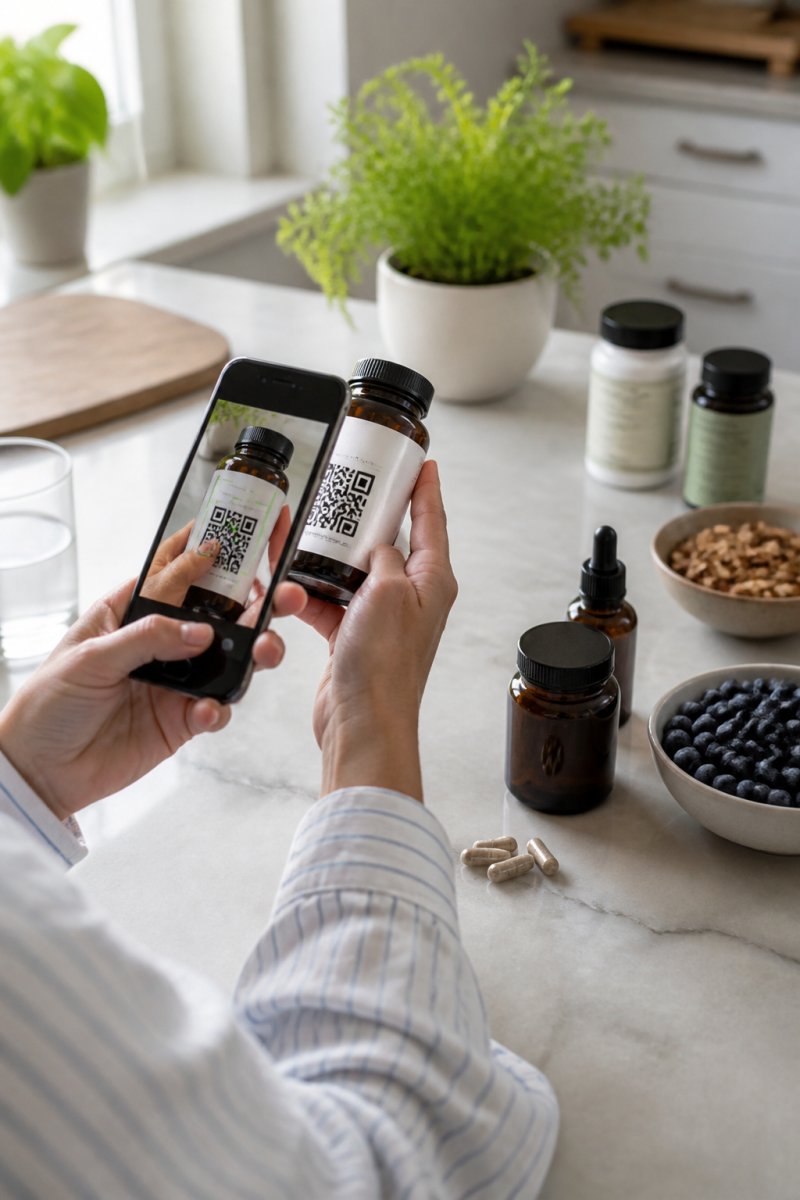
- QR codes that link to the product's COA or a manufacturer verification page
- Serialized authentication codes that can be verified on the brand's website
- Blockchain-based tracking that records the product's journey from raw material to shelf
Mobile-first identification means you can verify a product before you leave the store or finalize an online purchase. Scan the QR code, check the batch number on the manufacturer's website, and confirm the COA exists for that specific lot. This takes under two minutes and eliminates significant counterfeit risk.
Step 5: Safe Online Purchasing and Authorized Resellers
Safe online purchasing starts with one rule: buy from authorized resellers or directly from the manufacturer. The volume of third-party marketplace listings for supplements makes it easy to accidentally purchase from unauthorized sources.
Authorized distributors maintain proper storage conditions, handle inventory within shelf-stability guidelines, and source products directly from the manufacturer. Unauthorized resellers may sell expired stock, counterfeit products, or items that have been improperly stored.
Before purchasing online, verify the following:
- Check the manufacturer's website for an authorized reseller list.
- Confirm the seller's return policy and contact information.
- Read seller reviews specifically for the product category, not just overall ratings.
- Avoid listings that are significantly below market price. Deep discounts on supplements often signal counterfeit or expired inventory.
- Look for fulfilled-by-brand options when available on major marketplaces.
According to FTC consumer guidance on buying health products online, consumers should be skeptical of health products sold through unsolicited emails, pop-up ads, or social media accounts with no verifiable business history.
Step 6: Supply Chain Transparency and What to Ask Before You Buy
Supply chain transparency is the angle most guides skip entirely. Knowing where a product's ingredients were grown, processed, and tested gives you a verification layer that no label or seal can fully replace.
The supplement industry sources ingredients globally, and the quality of raw materials varies significantly by origin, harvest conditions, and processing methods. A turmeric extract from a supplier with third-party-verified growing practices is fundamentally different from one with no disclosed origin.
Questions worth asking any supplement brand before purchasing:
- Where are your raw ingredients sourced, and do you audit your suppliers?
- Do you conduct identity testing on incoming raw materials to confirm botanical species?
- Are your finished products tested by a third-party lab, and can I see the COA for this batch?
- Are you manufactured in an FDA-registered, cGMP-compliant facility?
- What is your policy if a product is recalled or found to be out of specification?
Brands with genuine supply chain transparency answer these questions readily. The National Institutes of Health Office of Dietary Supplements consumer fact sheet recommends that consumers research both the product and the manufacturer before purchasing, noting that transparency about sourcing and testing is a key indicator of quality.
How Expert Curation Helps You Find Authentic Natural Health Products
Doing all of the above verification work for every product you consider buying is genuinely time-consuming. This is where expert curation adds real value, distinguishing a serious natural health retailer from a general marketplace.
At All-Natural Healing Store, every product is personally vetted by Dr. House, known as "Dr. Holistic," who brings 30 years of experience in the environmentally safe health and nutrition industry. That vetting process means the authentication work has already been done: checking for regulatory compliance, confirming third-party testing, verifying ingredient purity, and screening for modern-day pollutants before any product reaches our customers.
This matters especially for consumers managing chronic wellness concerns or those with sensitive systems who can't afford the trial-and-error cost of poorly authenticated products. Products recommended to patients for over two decades carry a different kind of accountability than anonymous marketplace listings.
Expert curation also addresses the supply chain transparency gap. When a practitioner with clinical experience selects a product, they're drawing on knowledge of specific manufacturers, ingredient suppliers, and testing standards that most consumers don't have access to.
For those exploring natural solutions for specific concerns, including sleep-related issues where nasal breathing plays a role, the same authentication principles apply. Dr. Holistic's nasal clip for sleep apnea is an example of a product developed with direct practitioner involvement, designed to support nasal breathing by addressing mucous in the nasal passages and the nasopharynx. Authenticity in this context means knowing exactly what the device does, how it was developed, and who stands behind it.
The core argument running through every step in this guide is the same: authentic natural health products are verifiable. If a product, brand, or seller cannot support verification at any of these steps, that's your answer.
Identifying authentic natural health products takes more than a quick label scan. All-Natural Healing Store was built to solve exactly this problem, offering a curated selection personally vetted by Dr. House with 30 years of industry expertise, so you're not navigating the verification process alone. Browse our curated collection and add to cart with confidence, knowing every product has already been held to the standards this guide describes.
Frequently Asked Questions
Q: How do I tell if my supplements are fake?
A: Check the packaging for a batch number, expiration date, and a clear supplement facts panel. Authentic natural health products carry third-party testing seals from organizations like USP, NSF International, or ConsumerLab. Unusually low prices, blurry printing, missing lot numbers, or no authorized reseller listed are all strong signs of a counterfeit product.
Q: What third-party certifications should I look for on supplement labels?
A: Look for seals from USP (United States Pharmacopeia), NSF International, ConsumerLab, or Informed Sport. These organizations independently test natural health products for ingredient accuracy, potency verification, heavy metal testing, and contaminant screening. A certification seal means the product passed testing that the manufacturer did not control, which is a far stronger quality signal than any marketing claim printed on the front of the bottle.
Q: How does the FDA regulate natural health products?
A: Natural health products sold as dietary supplements fall under the Dietary Supplement Health and Education Act (DSHEA) of 1994, enforced by the FDA. Manufacturers must follow Current Good Manufacturing Practices (cGMPs) and register their facilities with the FDA. However, the FDA does not approve supplements before sale. This means consumers must rely on third-party supplement testing, label verification, and authorized resellers to confirm product quality and regulatory compliance.
Q: Are there specific red flags for counterfeit health products online?
A: Yes. Watch for sellers with no verifiable business address, prices far below the manufacturer's suggested retail, no batch number or lot code on the listing, and product images that look digitally altered or inconsistent with the brand's official packaging. Marketplaces that allow third-party sellers without vetting authorized distributors are higher risk. Always buy directly from the brand's official website or a confirmed authorized reseller, and cross-check the product's certification marks before completing any purchase.
This article was written using GrandRanker


